

Polaris RZR Roll Cages — Weld-It-Yourself Cage Kits for Pro R, Turbo R, Pro XP & XP1000
Filters
Part Manufacturer
Vehicle Brand
Vehicle Model
3
Component Type
1
Seat Number
Feature
Builders Components
Light Size
Electrical
8 Products
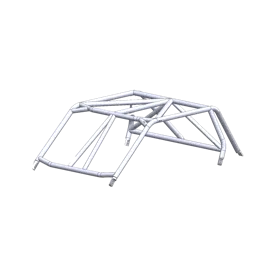
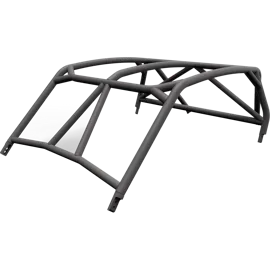
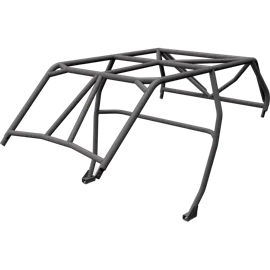
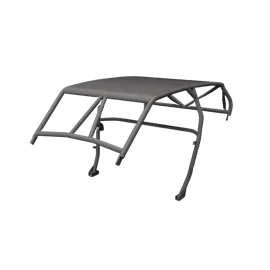
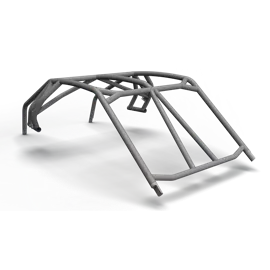
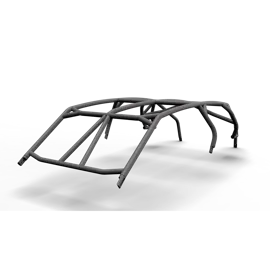
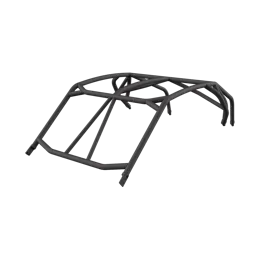
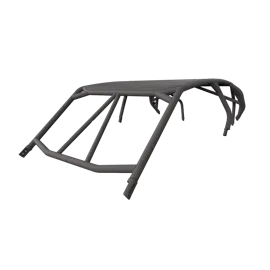
Every RZR roll cage LSK builds ships the same way: laser-cut DOM tube pieces, each etched with its part number, that assemble at the stock cage locations with the car itself as the jig — no fixture table, MIG or TIG, your shop's choice. We cut cage kits for the platforms Polaris actually sells: the RZR Pro R in 2-seat and 4-seat, the Turbo R and Pro XP in 2-seat and 4-seat, and the XP1000 and Turbo S in flat or radius styles for both seat counts. The 4-seat and Pro R kits step up to .120-wall DOM main tubes; supports run .095 DOM. A cage is the one part of a build you never want to compromise on, and a weld-it-yourself kit keeps the fab work — and the pride — in your own shop, starting from geometry proven on race UTVs. Matching aluminum roofs are built for each cage style, all designed and cut in Fontana, California.
Polaris RZR Cages — Common Questions
Which RZR models do you make roll cage kits for?
The RZR Pro R (2-seat and 4-seat radius), Turbo R and Pro XP (2-seat and 4-seat radius), and XP1000 / Turbo S (2-seat and 4-seat, flat or radius). Use the filters on this page or check each product's fitment before ordering.
Do I need a jig to build an RZR cage kit?
No — the supplied connectors install at the stock cage locations and the numbered tubes assemble directly on the car, so the RZR itself acts as the fixture. Every joint can be MIG or TIG welded.
What tubing are the RZR cages made from?
DOM steel tubing, laser-cut and etched with part numbers. Main structures run 1.75-inch OD; the Pro R and 4-seat kits use .120-wall main tubes with .095 supports, and the 2-seat XP1000/Turbo S and Turbo R/Pro XP kits run .095 wall. Each product page lists its exact tube schedule.
What size roll cage is on a Polaris RZR?
LSK RZR cage kits use 1.75-inch OD DOM main tubing. The Pro R and all 4-seat kits step up to .120-wall main tubes with .095-wall supports; the 2-seat XP1000/Turbo S and Turbo R/Pro XP kits run .095 wall throughout. Each product page lists its exact tube schedule.
How much does it cost to add a roll cage to a RZR?
A weld-it-yourself LSK RZR cage kit is the low-cost route because you supply the labor: the kit itself is the cost, and welding it out takes a day or so with a MIG or TIG machine and no fixture. Assembled cages from most brands run roughly double a kit once fabrication is included. Current kit pricing is listed on each product above.
Is a roll cage worth it on a RZR?
The factory cage is built to meet the machine's cost target, not to take a roll at speed in the desert. If you jump the car, run whoops fast, or carry passengers who did not sign up for the risk, a purpose-built DOM cage is the single most consequential upgrade on the machine — and unlike power adders, it is the one you hope you never test.
Flat or radius — which RZR cage style should I pick?
Radius cages sweep the roof line back for a lower race profile; flat cages keep a level roof line with maximum headroom. Both are the same DOM construction, and matching LSK roofs exist for each style on the XP1000/Turbo S.